CVE-2017-9506 - SSRF# Jira-Scan
ONLY TESTED WITH PYTHON 3
Provide a list of websites to test with out the http or https and this will test each one for the SSRF vun.
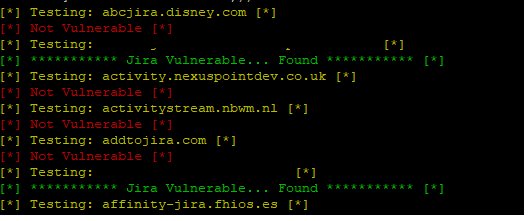
Use a VPS from DO
[](https://www.digitalocean.com/?refcode=e22bbff5f6f1&utm_campaign=Referral_Invite&utm_medium=Referral_Program&utm_source=badge)
CVE-2017-9506
-----
The IconUriServlet of the Atlassian OAuth Plugin from version 1.3.0 before version 1.9.12 and from version 2.0.0 before version 2.0.4 allows remote attackers to access the content of internal network resources and/or perform an XSS attack via Server Side Request Forgery (SSRF).
According to the Atlassian Jira the following versions are vulnerable:
* Jira < 7.3.5
Overview of SSRF
----------
In a Server-Side Request Forgery (SSRF) attack, the attacker can abuse functionality on the server to read or update internal resources. The attacker can supply or a modify a URL which the code running on the server will read or submit data to, and by carefully selecting the URLs, the attacker may be able to read server configuration such as AWS metadata, connect to internal services like http enabled databases or perform post requests towards internal services which are not intended to be exposed.
Description
-----------
The target application may have functionality for importing data from a URL, publishing data to a URL or otherwise reading data from a URL that can be tampered with. The attacker modifies the calls to this functionality by supplying a completely different URL or by manipulating how URLs are built (path traversal etc.).
When the manipulated request goes to the server, the server-side code picks up the manipulated URL and tries to read data to the manipulated URL. By selecting target URLs the attacker may be able to read data from services that are not directly exposed on the internet:
Cloud server meta-data - Cloud services such as AWS provide a REST interface on http://169.254.169.254/latest/meta-data/ where important configuration and sometimes even authentication keys can be extracted
Database HTTP interfaces - NoSQL database such as MongoDB provide REST interfaces on HTTP ports. Docker and Kubetnetes - if the local ports are exposed internally an attacker can create / delete pods & containers and retrive other secrets.
If the database is expected to only be available to internally, authentication may be disabled and the attacker can extract data Internal REST interfaces
Files - The attacker may be able to read files using file:// URIs The attacker may also use this functionality to import untrusted data into code that expects to only read data from trusted sources, and as such circumvent input validation.
Fun SSRF Payloads to try....
AWS - IAM role will leak AWS key
```
http://169.254.169.254/latest/meta-data/
```
Alibaba
```
http://100.100.100.200/latest/meta-data/
```
Docker - List Containers
```
http://127.0.0.1:2375/v1.24/containers/json
```
Kubernetes ETCD - Can contain API keys and internal ip and ports
```
http://127.0.0.1:2379/v2/keys/?recursive=true
```
登录后查看神龙缓存的 POC 文件快照
登录查看